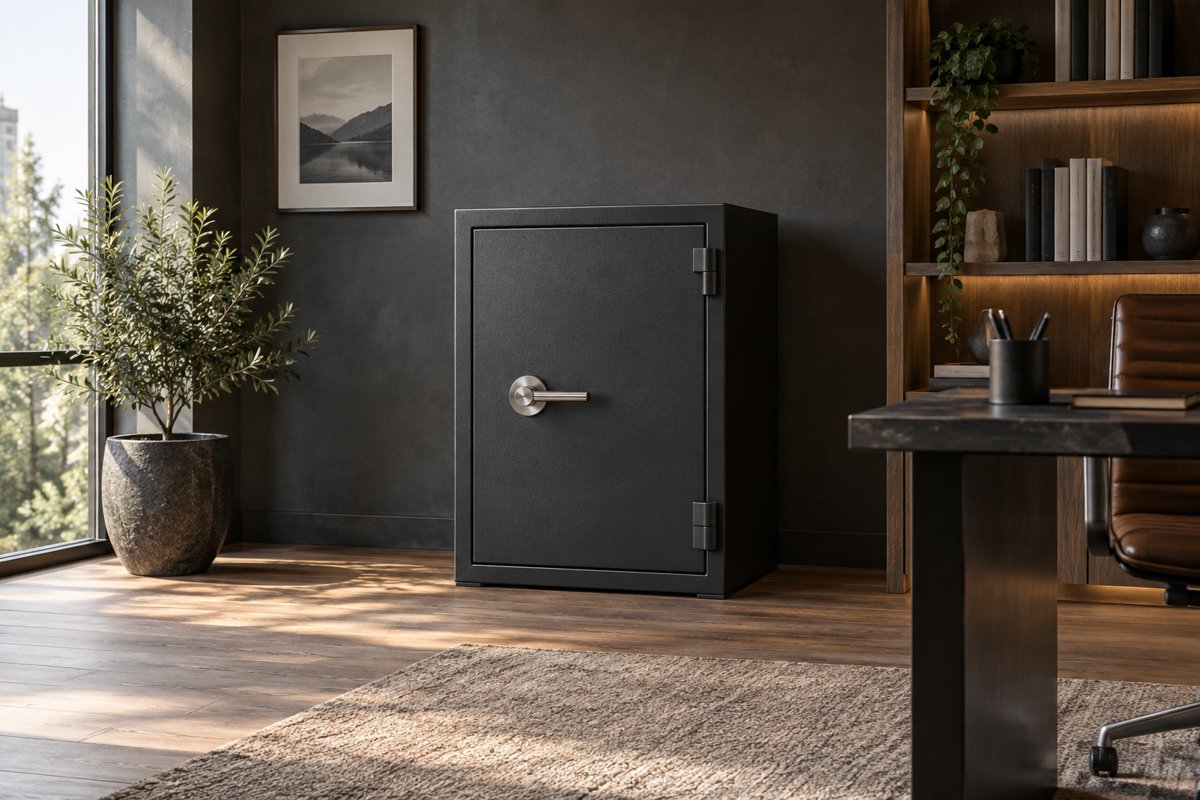
The type of protection matters when storing documents and data storage devices. A cabinet with room for your files is not automatically suitable for protecting every kind of contents against fire.
Start with the contents
Distinguish paper documents, digital storage media and other items. Ask which contents the manufacturer specifies for the particular model. A broad description such as fire-resistant is not enough to compare two options properly.
Read the documentation
Compare the stated test, protection duration and conditions of use. Request documentation that matches the exact model. If access security and burglary resistance also matter, assess those properties separately.
Plan the internal layout
Measure folders, hanging files and storage boxes. Check the space between shelves and the door opening. Consider the weight of a filled cabinet and the space needed to retrieve documents easily.
Maintenance and placement
A protective cabinet must be closed and used according to its instructions. Ask about maintaining the locking mechanism and any seals. Check the access route and have the supporting surface assessed if the weight makes this necessary.
Details for your enquiry
- Paper, digital storage media or other contents
- Number of folders and room for growth
- Required protection and documentation
- Available space and access route
Frequently asked questions
Is every fire-resistant cabinet suitable for digital media?
Do not assume so. Check which types of contents are explicitly covered by the model documentation.
Can fire and burglary protection be combined?
That depends on the model. Assess each property separately using the relevant documentation.